
UNIFY Accelerating people-centered smart cities
The multi-stakeholder platform that connects government officials with domain experts
Unify - The multi-stakeholder platform that connects government officials with domain experts
Royal College of Art X UN Habitat
Role: Service Design, UX & UI, Design Research, Wireframing, Prototyping, High Fidelity Prototypes, User Research & Interviews, Testing, Business Model, Value Proposition, User Journey, Low Fidelity Prototypes, Concept Development, Branding, Information Architecture
Tool: Figma, Adobe Illustrator, Spreadsheet, Power Point, Photoshop, Miro
Team: Yashasri, Sujeet, Madhurya, Kazu, Marta - 10 weeks


UNIFY powered by UN Habitat - A multi-stakeholder hub connecting governments with domain experts—the Upwork for civic expertise in smart-city development.
The briefing
In late 2022, we worked with UN-Habitat to envision a forward-looking digital service solution. Starting from the brief below, we were challenged to think further and propose ideas that exceeded expectations.
…”The Digital Helpdesk for Cities is a multi-stakeholder initiative that brings together United Nations agencies, city networks, development banks and other partners to provide technical support to Cities on topics such as digital transformation, digital governance, digital human rights and digital included. It ultimately aims at accelerating people-centered digital transformation.”
The Digital Helpdesk for Cities focuses on three main goals:
Provide tailored support to public officials and community representatives on urban digital governance and digital infrastructure based on global good practices and local contexts.
Align efforts and establish partnerships to make technical support for digital transformation more accessible to cities and communities worldwide.
Scale up solutions and best practices in inclusive digital transformation.
Project outcomes:
Increase access to knowledge and technical support
Strengthen tailored technical advisory support
Promoting inclusive digital transformation to improve people’s livelihoods
The global context
The initial research has revealed that when establishing smart cities, the emphasis should not solely be on technology. It is imperative to consider other factors, such as the needs and rights of citizens, as demonstrated by the provided examples.
(Source: Reuters, BBC, MIT Technology Review)

“Public participation is an umbrella term that describes the activities by which people’s concerns, needs, interests, and values are incorporated into decisions and actions on public matters and issues.”
Public participation - a multi-stakeholder collaboration
After conducting extensive research, we came to the realization PP involves collaboration among multiple stakeholders. We have categorized these stakeholders into two groups:
Local governments, which represent the various boroughs in London.
Partners (enablers), which are external organizations and individuals with domain knowledge.
These two groups of stakeholders work together to serve the citizens, who are the ultimate beneficiaries of the PP initiatives. Following our briefing from the UN, we examined how local governments and partners can effectively implement PP initiatives.

Journey map
To gain a better understanding of public participation and identify any pain points or gaps in the current process, we charted the civil servants’ journey.

Problem statement: A circular causality
„Enablers have the resources and knowledge to support civil servants. However, civil servants fail to leverage their expertise due to lack of timely access and ineffective communication with the enablers.“

„Public participation initiatives are not successful as civil servants are unable to formulate effective engagement strategies due to the lack of capacity, knowledge, and funding.“
Value proposition
Our integrated multi-stakeholder platform
helps civil servants formulate effective public participation strategies by offering timely support through a credible network of enablers and a dynamic knowledge repository.
-

Network
Credible network of verified enablers
-
Time
Timely engagement with enablers and UN support
-

Knowledge
Dynamic knowledge repository of best practices, events etc.


How Unify Works: A Breakdown of the Civil Servants Journey
Trish - Newham’s Public Participation Lead - is responsible for maximizing citizen involvement in government initiatives. She’s currently tasked with engaging residents in the Green City Project but is struggling to maintain participation due to limited in-house expertise, so she’s seeking external support to deliver the project.


Trish logs into the portal and browses through the page, reviewing job listings to identify potential partners who she can onboard for the Green City Project.
Trish identifies interested partners who are willing to support the project and also has the option to seek advice from the United Nations. The platform recommends Arnauld's profile to Trish based on his expertise and availability.
She examines Arnauld's skills, CV, recommendations, and relevant projects he has worked on. Furthermore, noticing that he is a Certified Partner, she decides to establish a connection with him.
Trish is the Public Participation Lead for Newham, whose responsibility is to ensure the highest level of citizen participation in government initiatives. Her current assignment is to involve citizens in the Green City Project, but she is facing challenges in engaging and maintaining citizen participation due to a lack of expertise within the organization. Consequently, she is seeking assistance in executing this project. Upon discovering Unify, she decides to try it out. She signs up for the platform as a local government entity and begins seeking assistance by inputting her project details and requirements.

How Unify Works: A Breakdown of the Partners’ Journey
Now, let's consider Arnauld, a freelance digital analyst who received an invitation from the United Nations to participate in their platform. Prior to joining the platform, Arnold encountered difficulties while working with governments, primarily due to his limited involvement in the decision-making process.
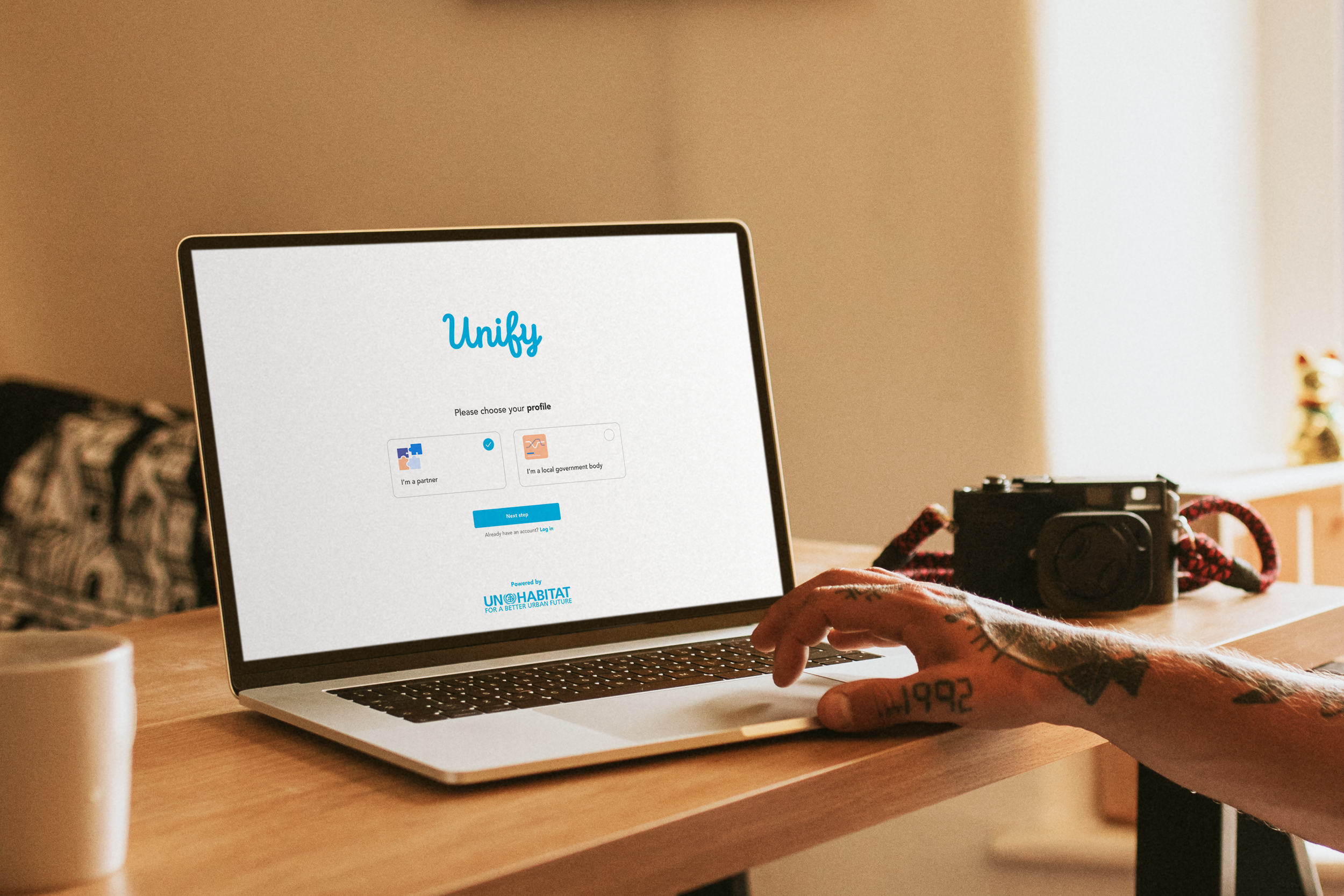

Upon receiving a meeting invitation from Trish, he logs into the portal. As a first-time user of the platform, he must either be invited by the UN or apply for membership during the registration process.
After discovering and reviewing the job recommended by Trish for the Green City Project, he becomes interested in contributing to it and applies for the position. Upon connecting with each other, they will collaborate on the project.
Upon successfully completing the project, the case study will be uploaded to the knowledge repository for future reference. The repository also provides customized support and a glossary of terms utilized in the policy-making process.
Now turning to Arnauld, he is a freelance governance expert and digital analyst. To date, he has faced challenges working with governments since he had limited involvement in the decision-making process for the projects he was assigned to. Nonetheless, Arnauld learns about the innovative platform called Unify hosted by UN Habitat through his network.
Ecosystem Map: Flow of Goods


Prototyping: Information Architecture
Research: Feature validation
To refine our service, we developed initial low-fidelity prototypes and tested our user, value, and business hypotheses by validating them with a range of stakeholders, including civil servants such as councillors, partners like freelancers, and domain experts. This collaborative process enabled us to gather feedback and make necessary adjustments to enhance our offering.

Government loop

Partner loop
In addition to receiving feedback on areas such as copywriting, journey mapping, and visual cues, we learned that:
There were two potential approaches to the onboarding process, one based on invitations from officials and the other based on a certificate of expertise.
A non-profit business model, funded by the United Nations, would be more feasible than subscription-based models in many regions of the world.
The knowledge archive should be jointly managed by both partners and officials and could by supported by AI mid-term.
These insights helped us refine our service offering to better align with the needs and constraints of our stakeholders.
-
“I think you've positioned it pretty well, around employability, sustainability, and connections.”
Syed, Participation Lead, Newham
-
“I love the repository loop. Research has been repeated due to the lack of such a tool. Make it clear who will take care of it."
Imran, Nesta
-
"'Invitation only' makes the platform very credible and trustworthy."
Catherine, Councillor of Southwark
Lessons Learned
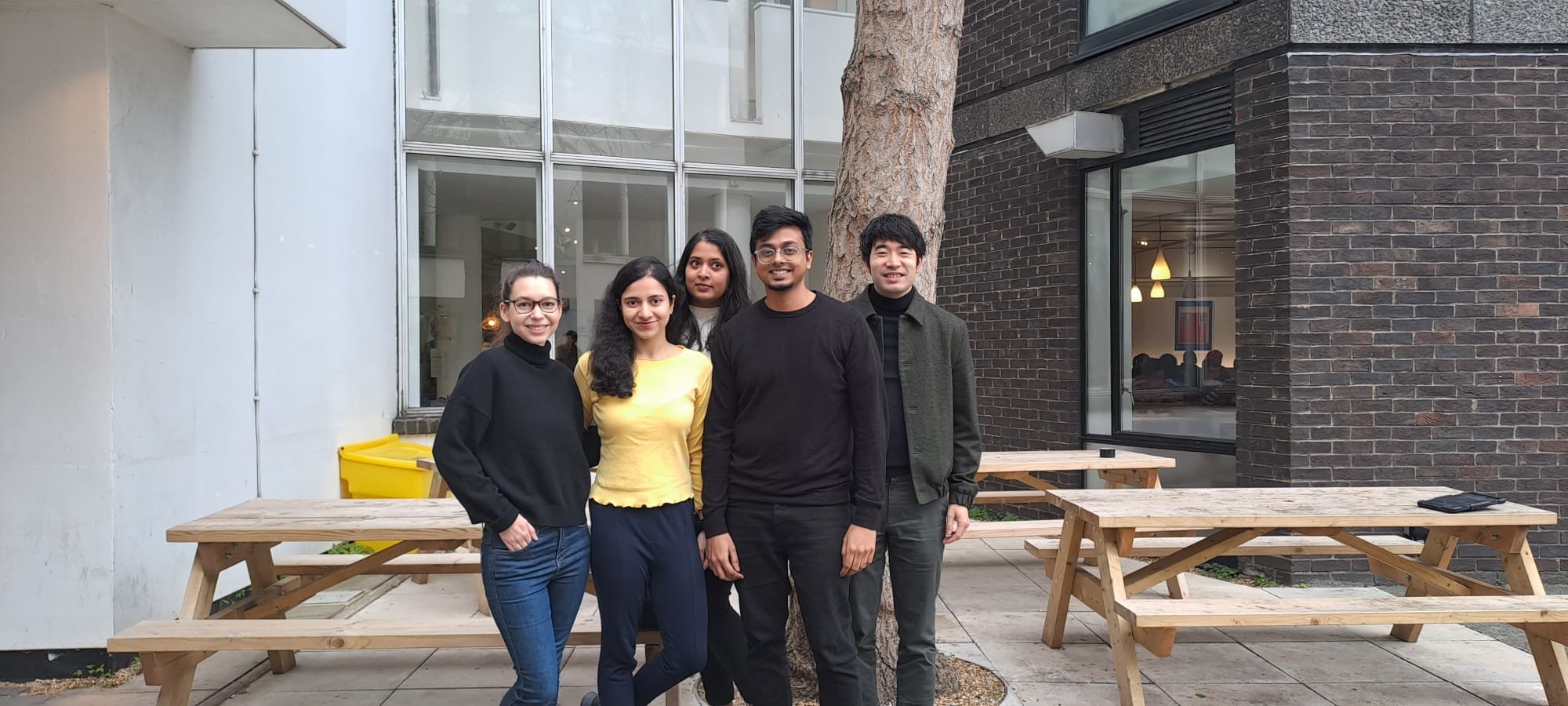
“This project allowed us to delve into the complex realm of public policy and design for local government, in partnership with the United Nations. Our team embraced the challenge and, through ideation and collaboration with stakeholders, we were able to pivot from our initial concept in term one to a new, innovative prototype in term two. Applying service design techniques strategically, we were able to create a brand-new service from scratch. As a team of five individuals with diverse backgrounds and skillsets, we found that our unique perspectives complemented each other perfectly, enabling us to work together effectively and bring our vision to life.”